
12 Career Documents Every Résumé Strategist Should Know

Career documents are most effective when they do more than describe a candidate’s experience. Together, they can help communicate a clear Value Proposition and reinforce a consistent Brand Identity across the job search.
As a career professional, you can help clients identify what they have to offer, understand what matters to their target audience, and communicate their value strategically. The following are 12 career documents that can be used individually or together to strengthen a client’s career communications.
These are some of the strategies explored in Career Professionals of Canada’s Certified Résumé Strategist (CRS) program, which teaches career professionals how to identify, position, and communicate client value effectively.
A résumé may be the foundation of a client’s career communications, but it does not need to work alone. Different situations call for different ways of communicating value. A networking contact may need something different from a recruiter, and an employer considering a candidate for a specific opportunity may benefit from information that would not normally appear in a résumé.
This is where a portfolio of career documents can become valuable. Rather than creating disconnected pieces, the résumé strategist can develop communications that reinforce the client’s Value Proposition and Brand Identity while adapting the message to different audiences and purposes.
The result is greater flexibility. Content developed for one document can inform another, while the client’s core value and professional identity remain consistent.
1. Résumé
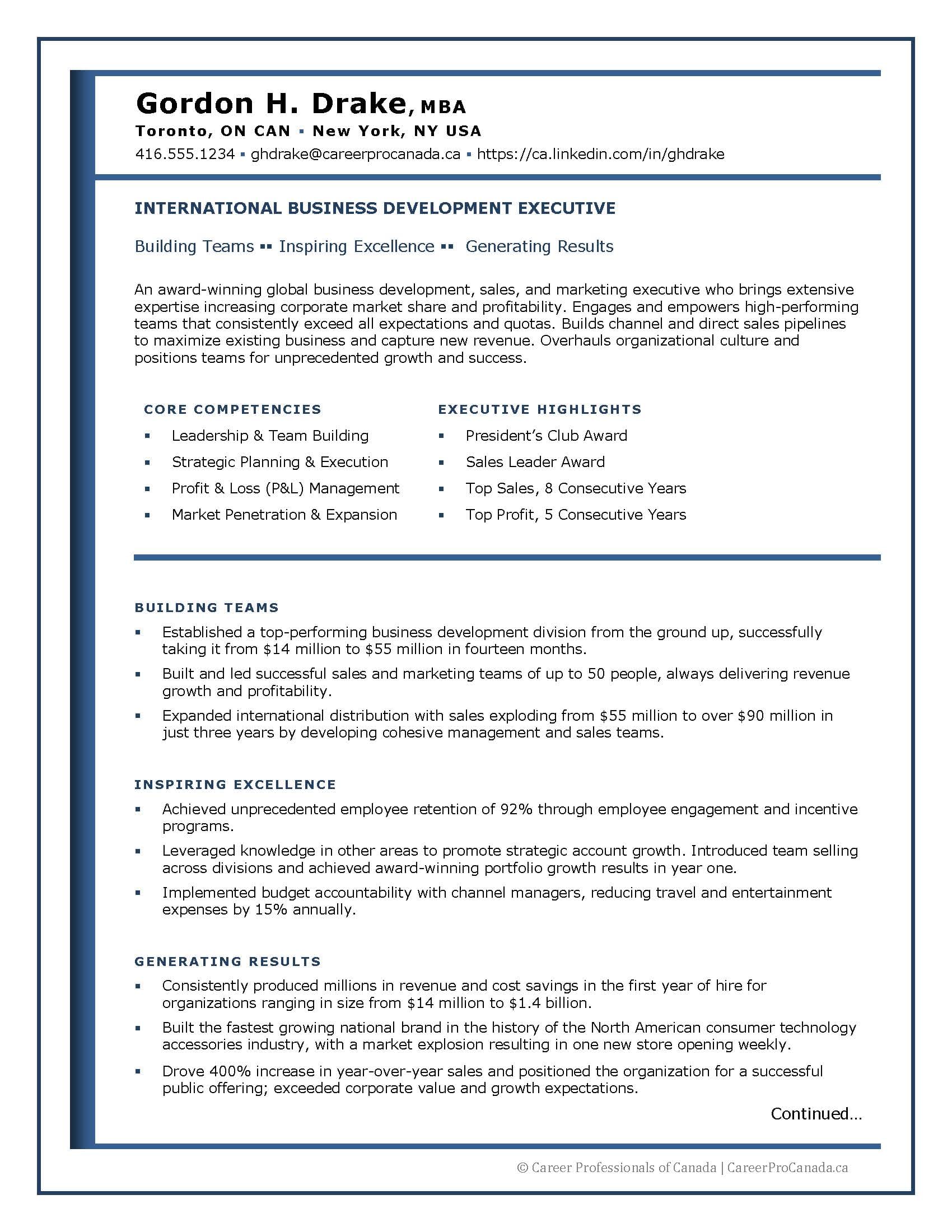
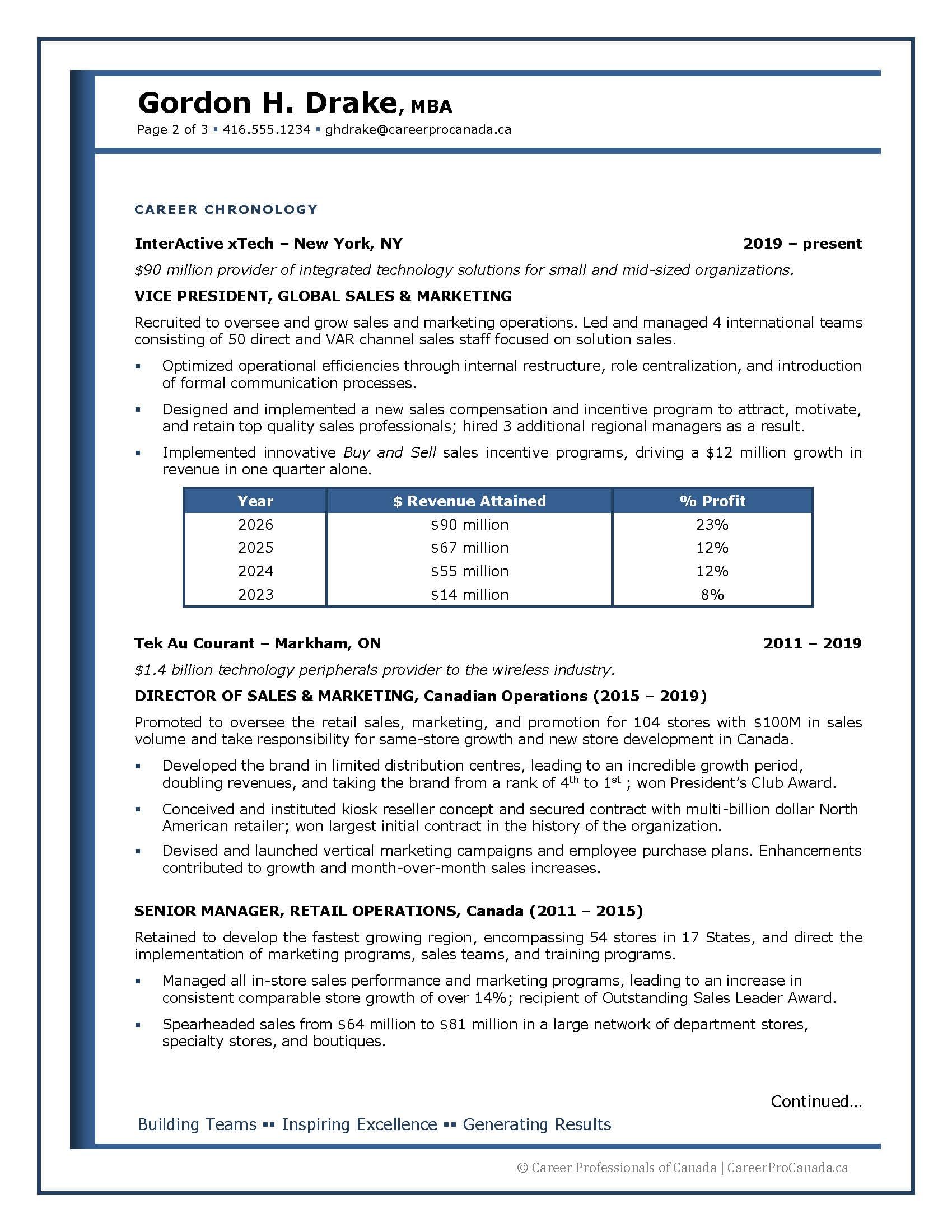
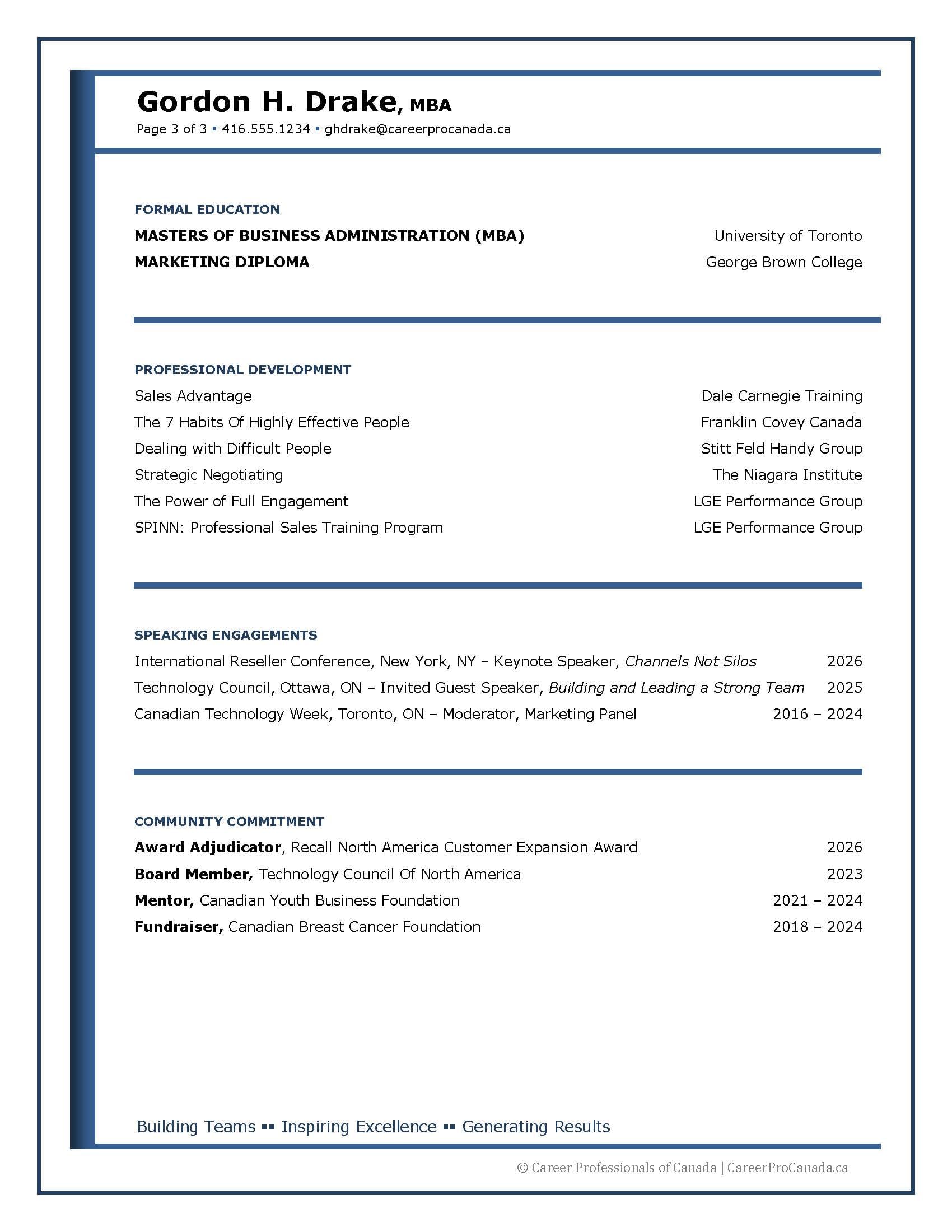
A strategically developed résumé helps the reader understand not only what the client has done, but what the client has to offer. It provides an important foundation for communicating the client’s Value Proposition and Brand Identity consistently across other career documents.
Here is a résumé example from the Certified Résumé Strategist (CRS) program:
2. Cover Letter
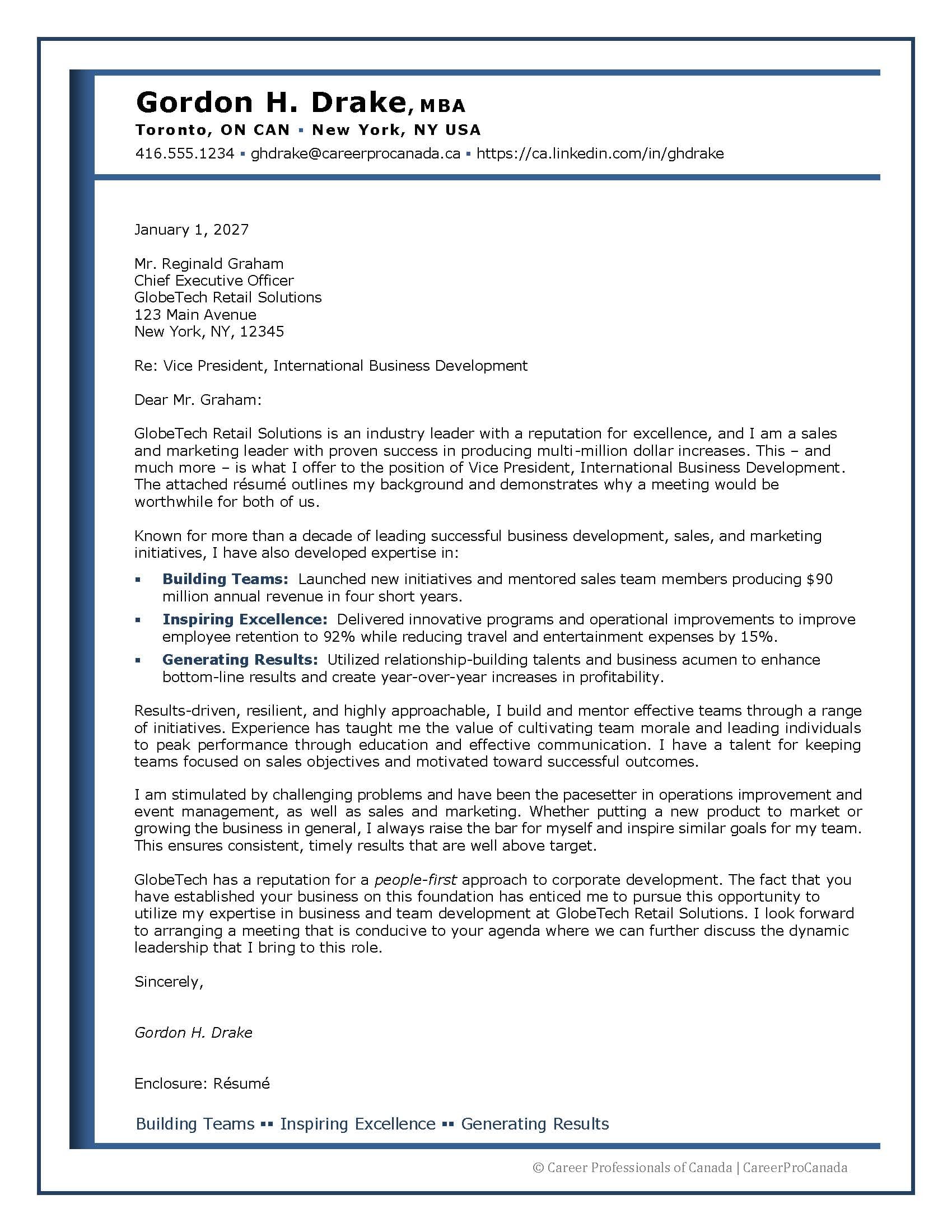
A cover letter complements the résumé by connecting the candidate’s qualifications directly to an employer and opportunity. It provides an opportunity to highlight relevant value, demonstrate understanding of the employer’s needs, and provide context that may not belong in the résumé itself.
Here is a cover letter example from the Certified Résumé Strategist (CRS) program:
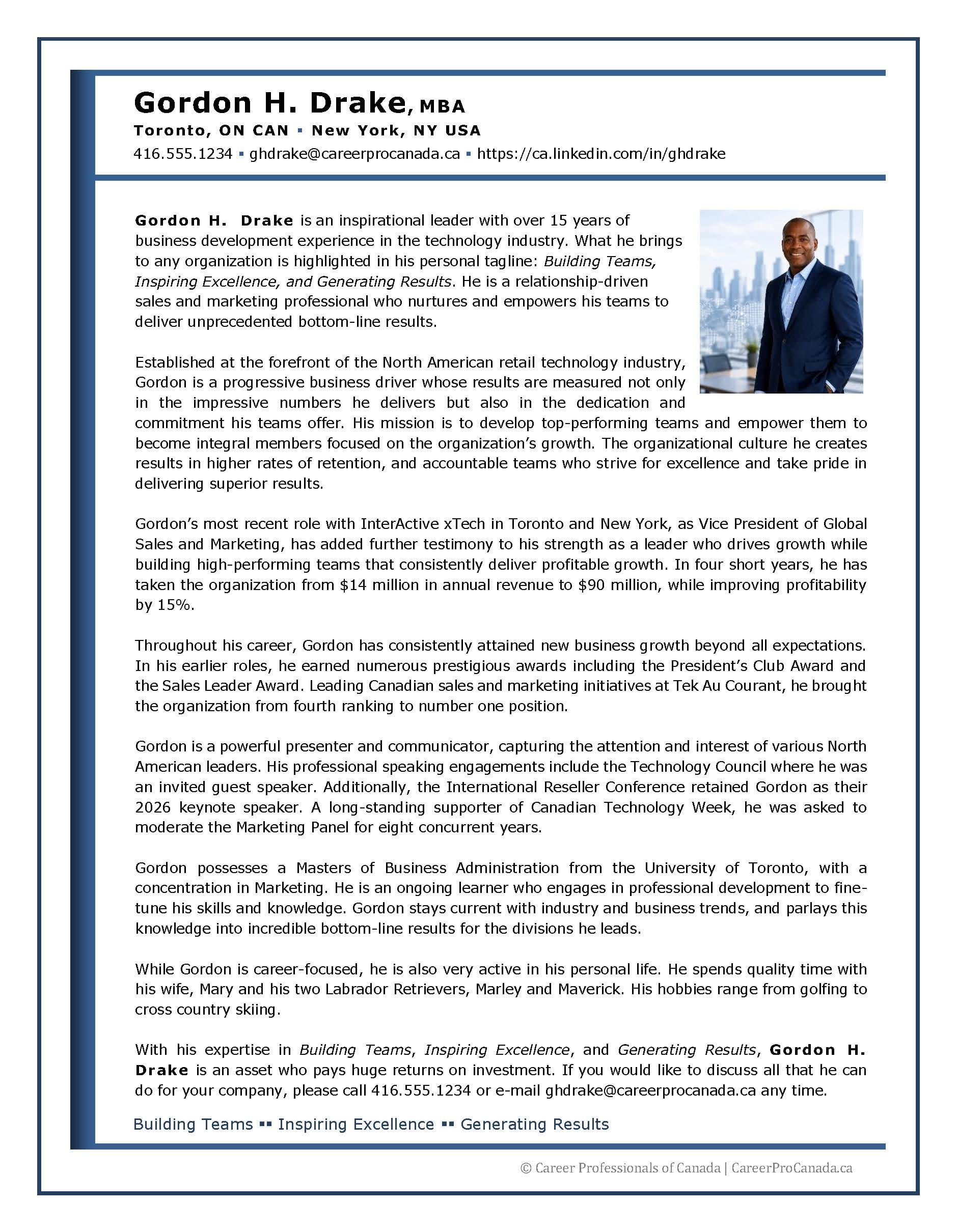
3. Narrative Profile (Biography)
This conversational marketing document is versatile and can serve many purposes beyond simply offering a résumé variation. A narrative profile gives clients a chance to express their Brand Identity in a more personal, conversational format while staying consistent with the Value Proposition in their other career documents. The content can be adapted for a LinkedIn profile, professional website, portfolio, company biography, speaking engagement, board appointment, or other professional introduction.
Here is a profile example from the Certified Résumé Strategist (CRS) program:
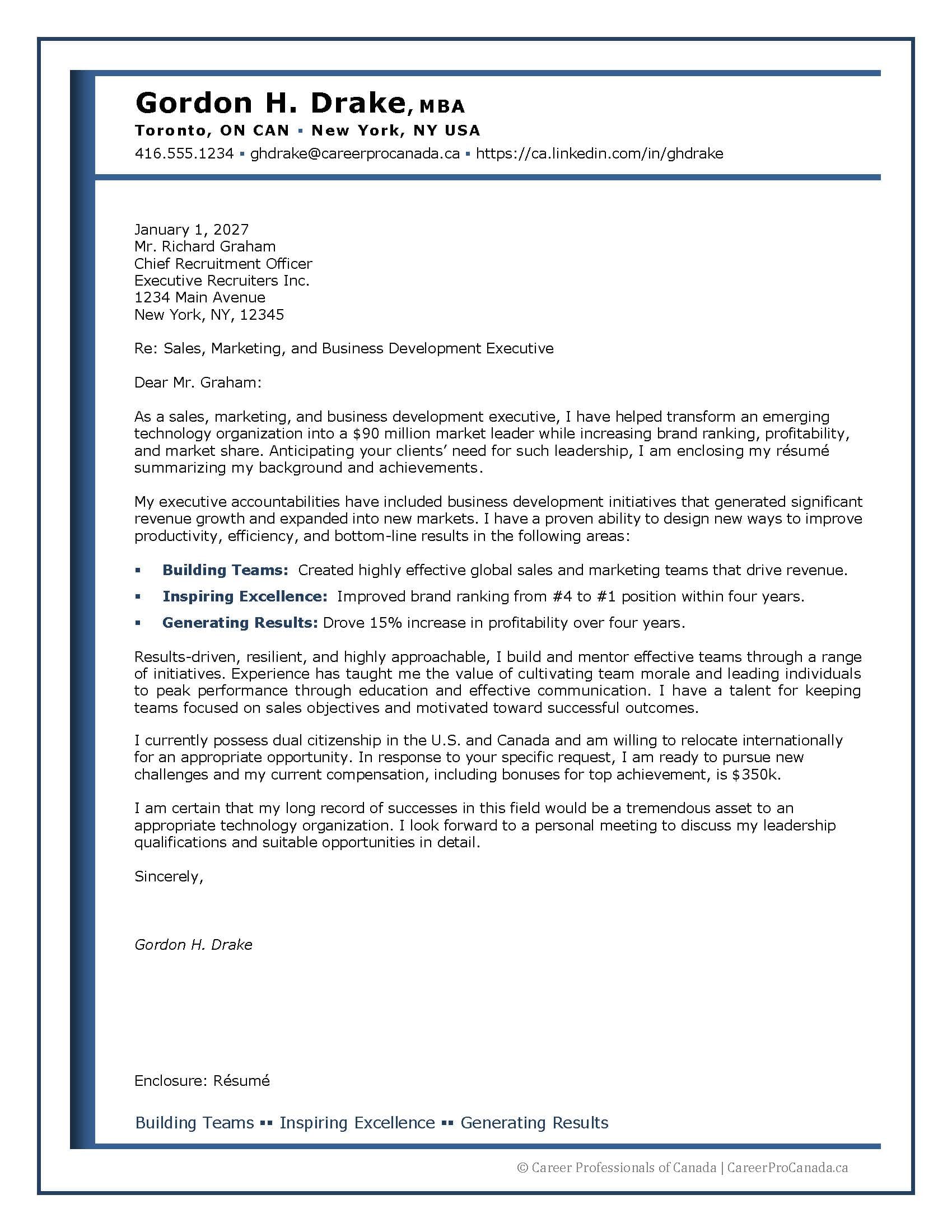
4. Recruiter Letter
Communication with a recruiter may require a different strategy from communication directly with an employer. A recruiter letter or message can introduce the candidate, clarify the kinds of opportunities being targeted, and highlight qualifications relevant to the recruiter’s client base, industries, occupational areas, or levels served.
Here is a recruiter letter example from the Certified Résumé Strategist (CRS) program:
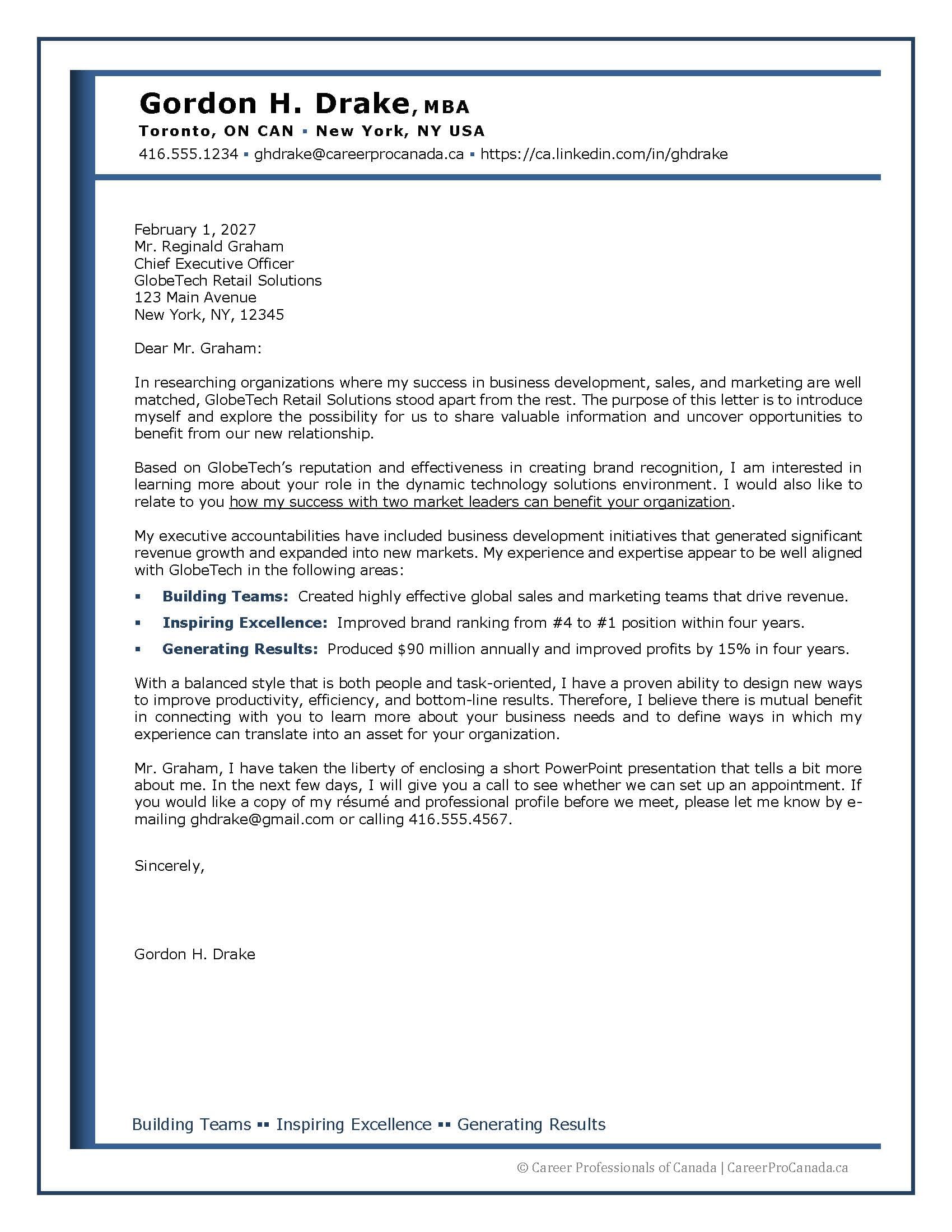
5. Networking Letter
Networking communication is designed to open conversations and build relationships rather than simply ask for a job. A networking letter or message might reconnect with an existing contact, approach someone new, request an informational conversation, seek an introduction, or explore an organization or field.
Here is a networking letter example from the Certified Résumé Strategist (CRS) program:
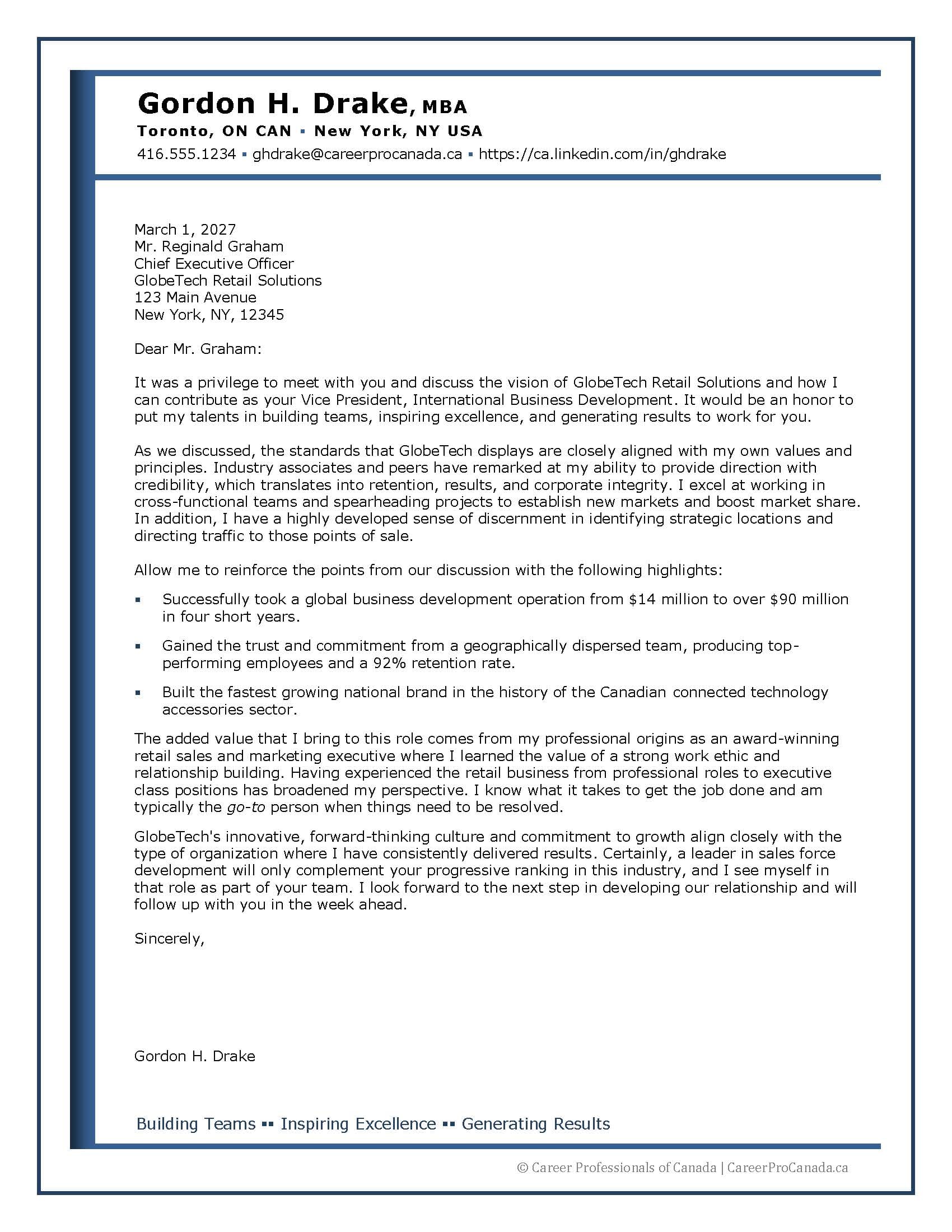
6. Thank-You Letter
A thoughtful thank-you message demonstrates appreciation and professionalism following an interview, networking conversation, or other important interaction. Strategically, it can also reinforce interest, remind the recipient of relevant value, clarify an important point, or continue a professional conversation.
Here is a thank-you letter example from the Certified Résumé Strategist (CRS) program:
7. Confirmation Letter
A confirmation letter or message can follow an application, interview, conversation, or other important interaction. It might confirm the candidate’s understanding of next steps, provide requested information, or reinforce continued interest.
Here is a confirmation letter example from the Certified Résumé Strategist (CRS) program:
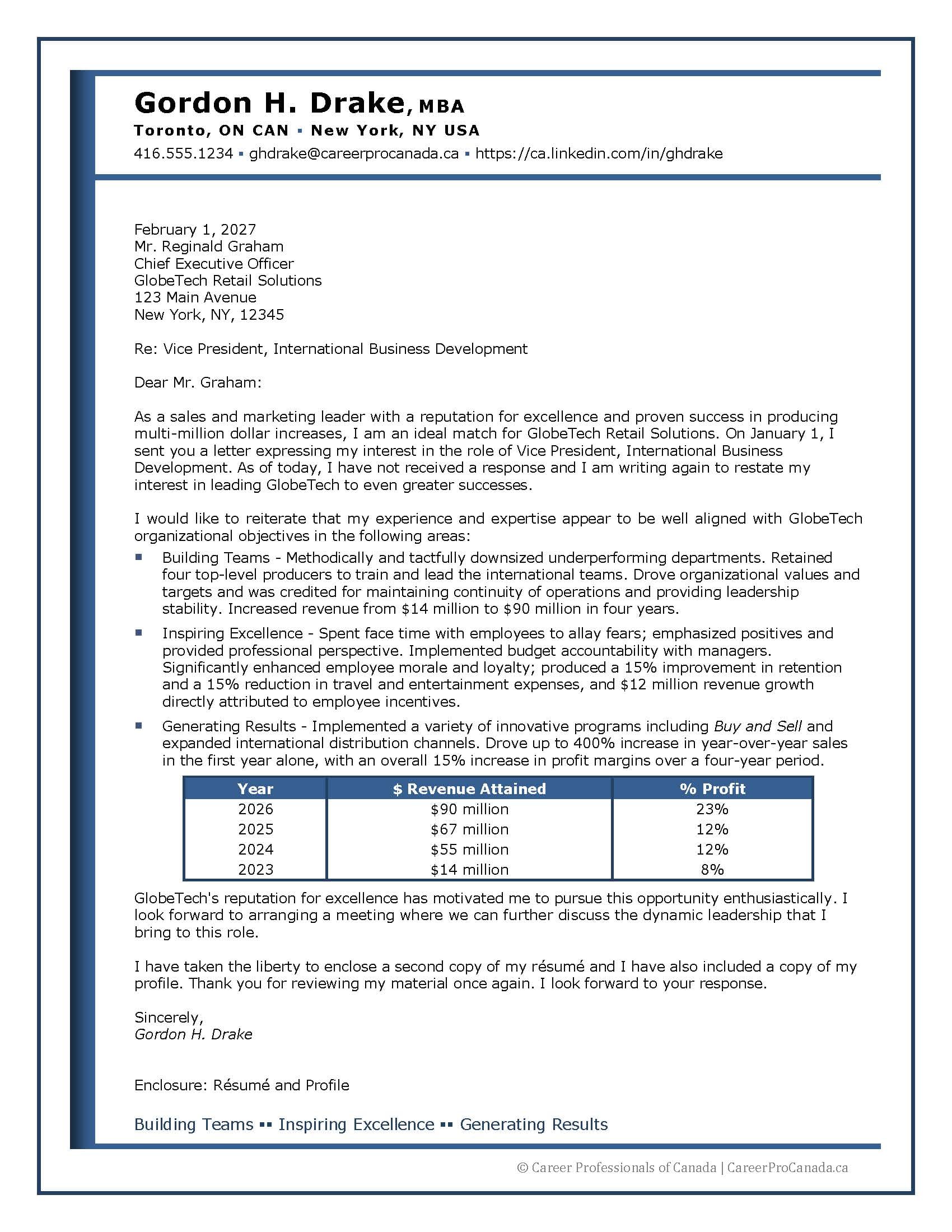
8. Resurrection (Follow-Up) Letter
Not every promising opportunity results in an immediate offer. Sometimes the strategic move is to reconnect. A follow-up letter can help a candidate renew contact with an employer or recruiter after time has passed, particularly when circumstances have changed or a new opportunity may have emerged.
Here is a resurrection letter example from the Certified Résumé Strategist (CRS) program:
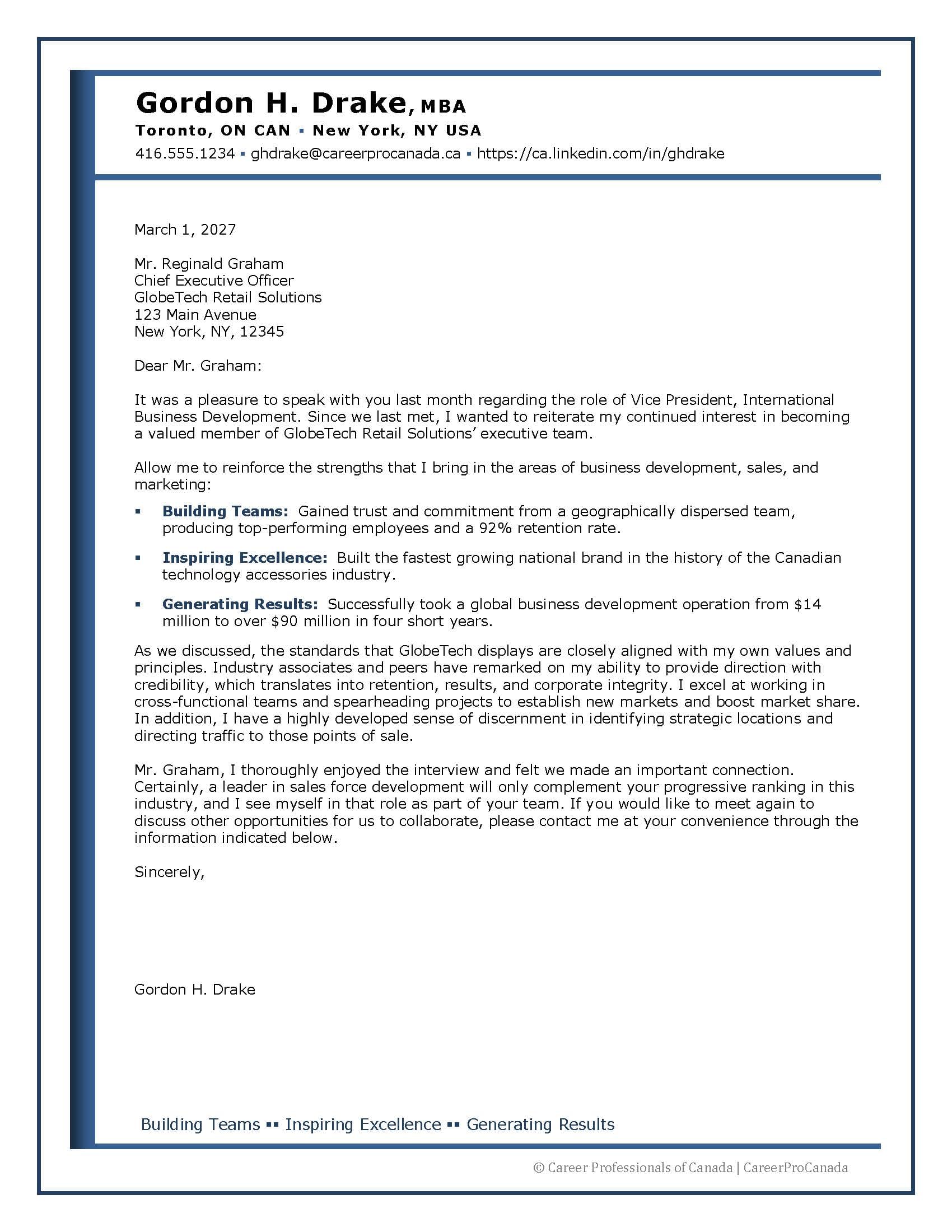
9. Reference (Referee) List
Job seekers should maintain a current and accurate list of people who have agreed to serve as references. Even a relatively straightforward document deserves strategic attention. It should be professional, consistent with the candidate’s other career communications, easy for an employer to use, and respectful of the privacy of referees.
Here is a reference list example from the Certified Résumé Strategist (CRS) program:
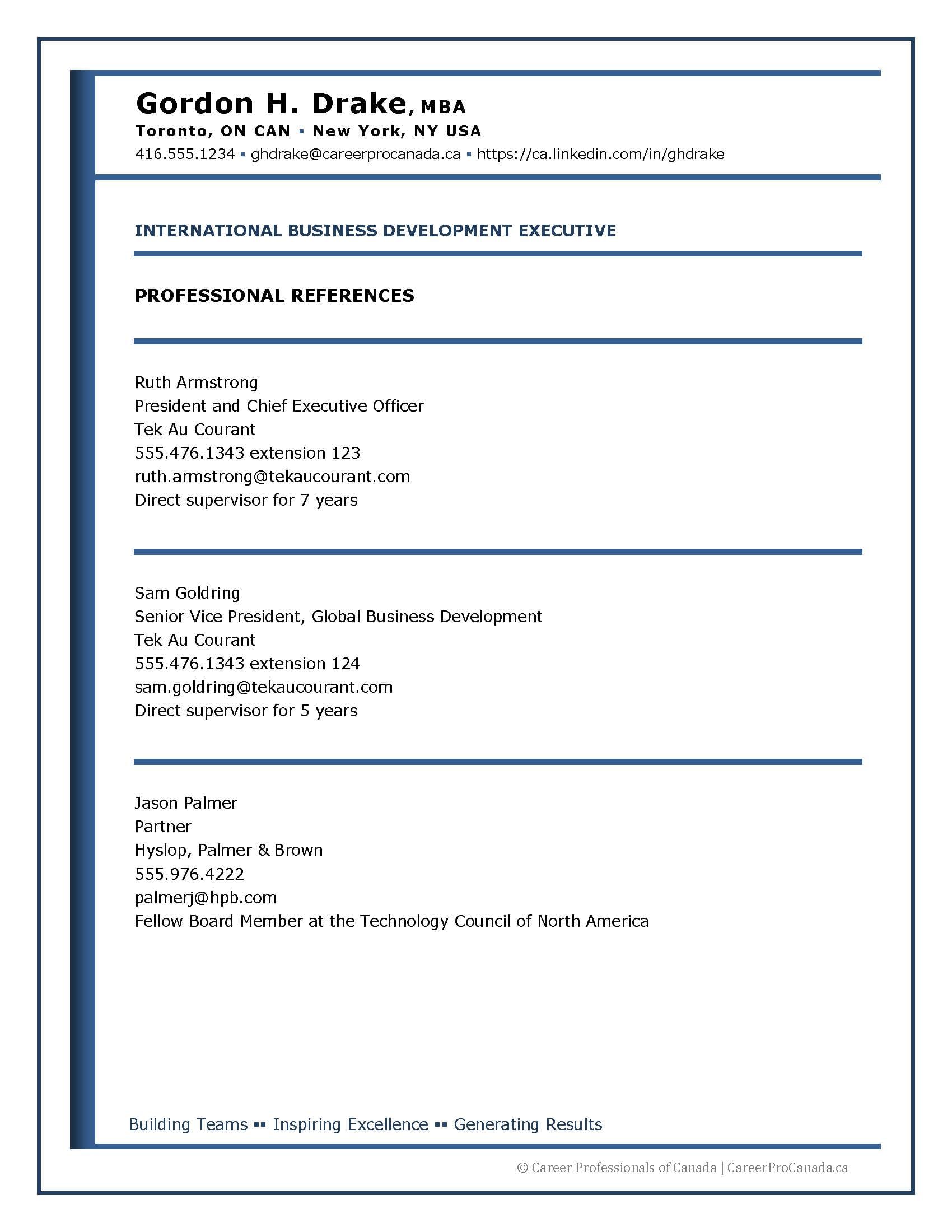
10. Comparison T-Chart
A comparison T-chart provides a concise visual connection between what an employer needs and what a candidate offers. One side identifies important requirements, priorities, or challenges. The other demonstrates corresponding experience, strengths, accomplishments, or capabilities.
Here is a branded comparision T-chart example from the Certified Résumé Strategist (CRS) program:
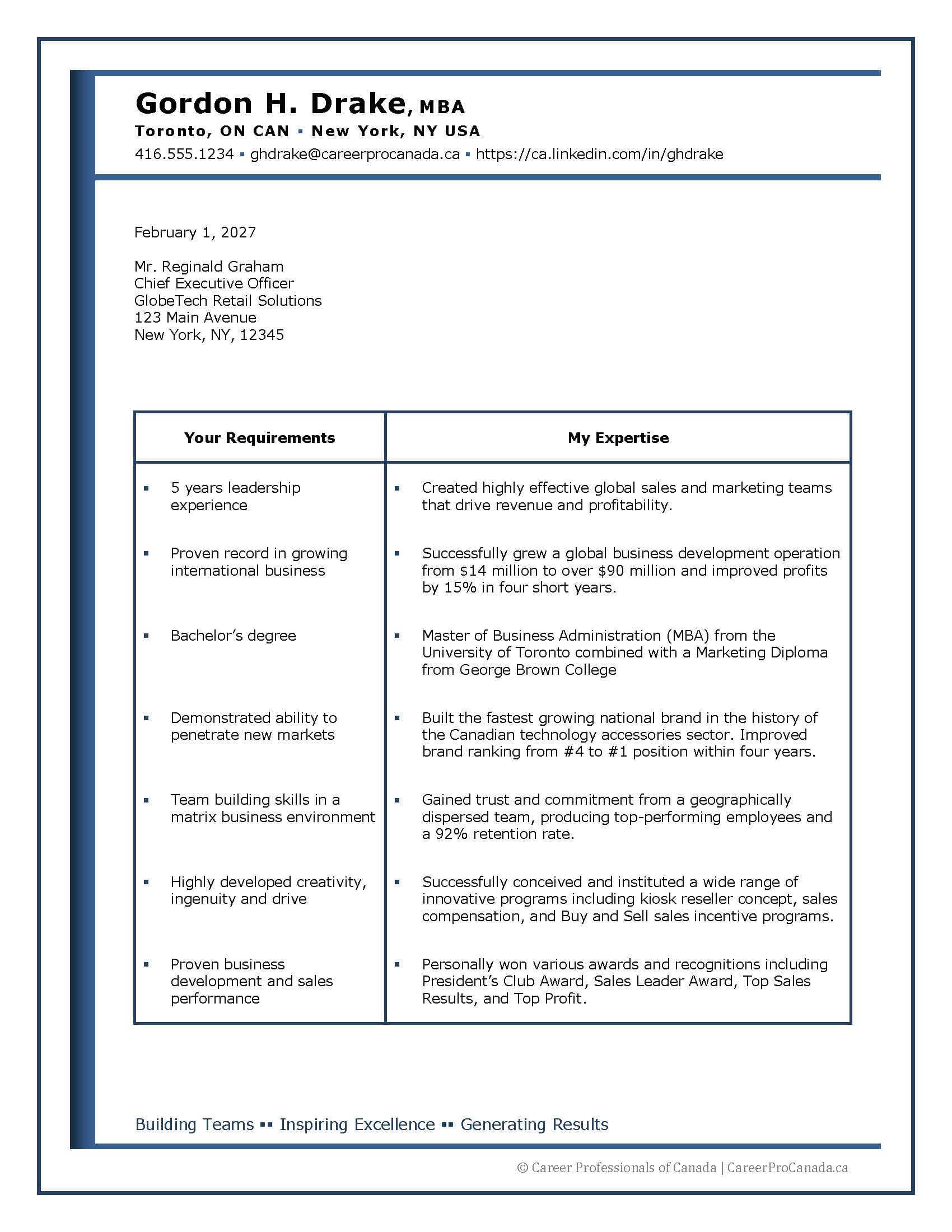
11. Key Initiatives
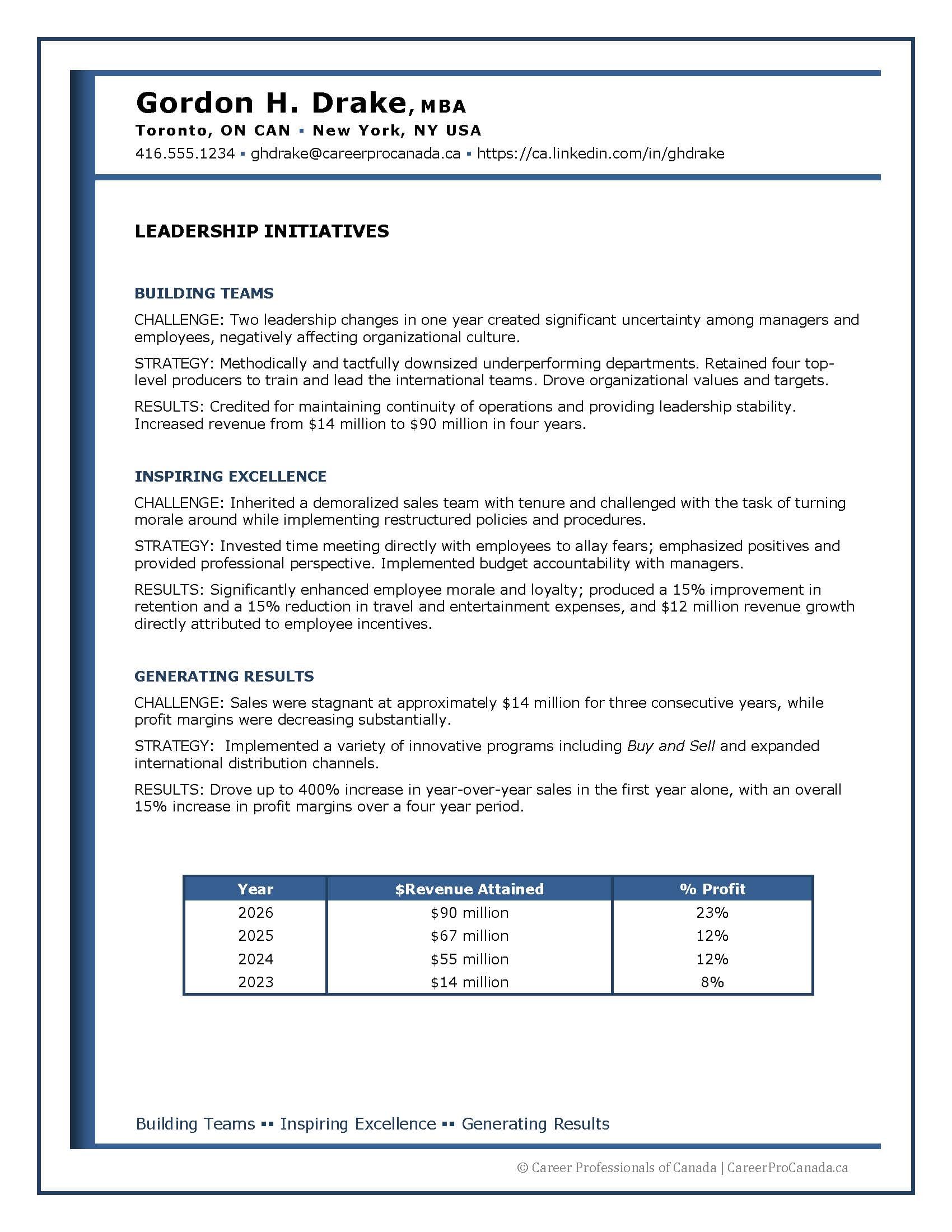
A key initiatives document allows a candidate to explore selected accomplishments, projects, or contributions in greater depth than is practical in a résumé. It can provide additional context about challenges, actions, contributions, and results, giving the reader stronger evidence of the candidate’s potential value.
Here is a branded key initiatives example from the Certified Résumé Strategist (CRS) program:
12. Business Case
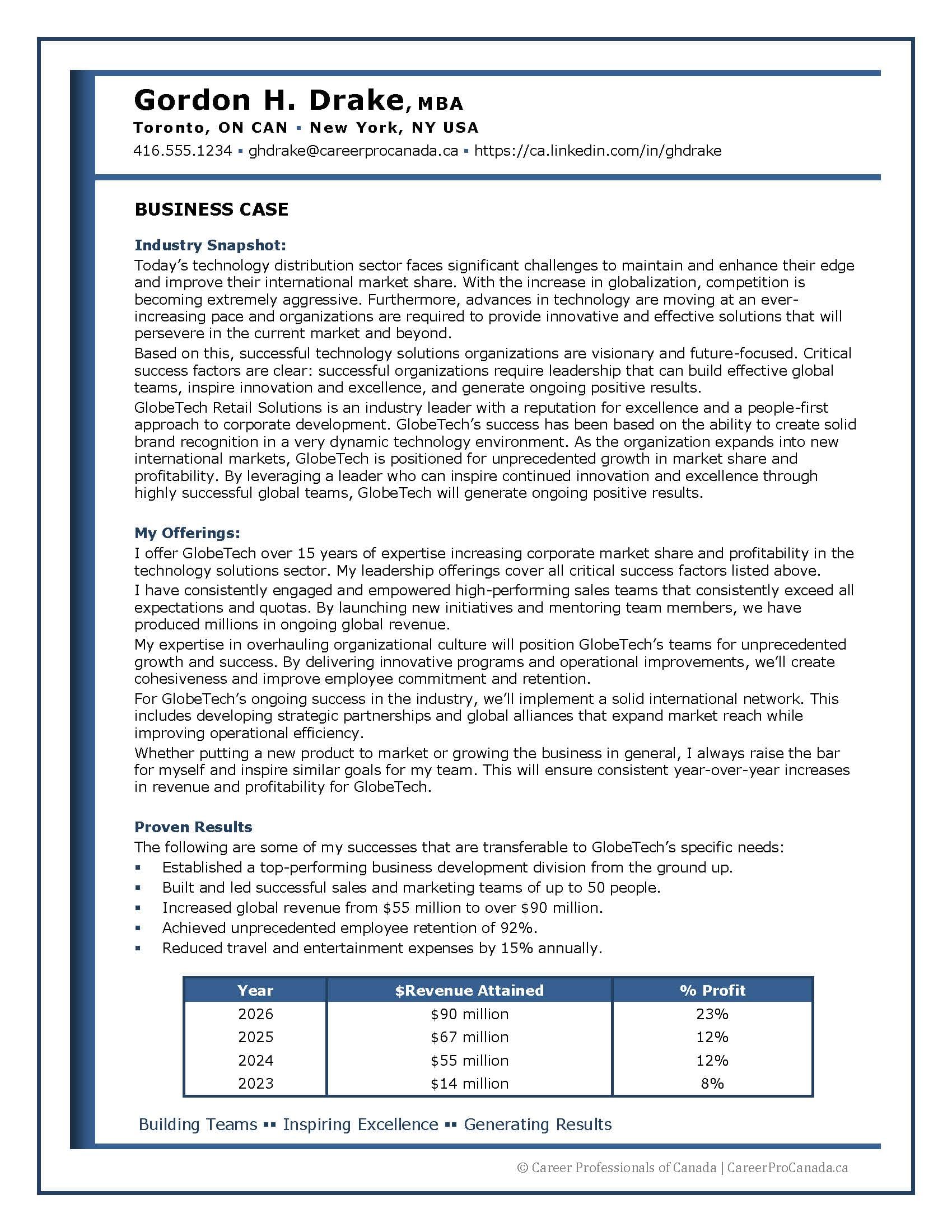
A business case shifts the focus from what a candidate has done to what that experience could mean for an organization. What does the organization need? What challenge could the candidate help address? How might the candidate’s experience translate into future value? Used selectively, a business case can demonstrate research, strategic thinking, industry knowledge, and initiative.
Here is a branded business case example from the Certified Résumé Strategist (CRS) program:
Bonus: Bring the Pieces Together in a Career Portfolio
Some clients may benefit from bringing selected career documents and supporting materials together in a professional portfolio.
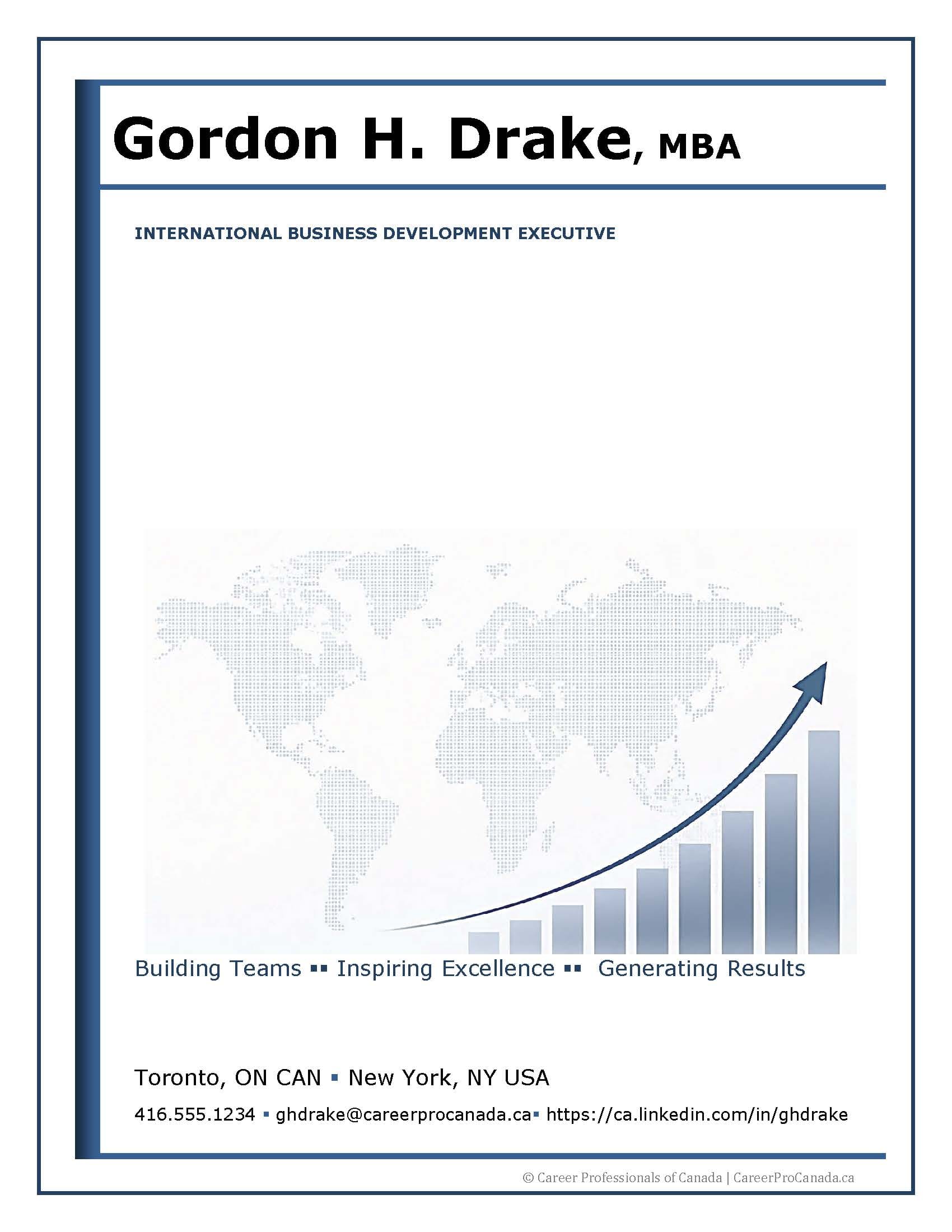
A portfolio can be printed or digital and tailored to the client, audience, and purpose. A simple portfolio cover can help present the collection as a cohesive professional package.
Along with selected documents from the list above, a portfolio might include other relevant materials such as certificates, credentials, awards, publications, work samples, recommendations, testimonials, or links to online content.
The goal is not to include everything. The résumé strategist helps determine what will strengthen the client’s story, provide useful evidence, and support the opportunity being pursued.
Here is a portfolio cover example for a branded package from the Certified Résumé Strategist (CRS) program:
The Documents Are Only Part of the Strategy
Looking through these examples, it might be tempting to focus on the documents themselves. But that misses the most important lesson.
A résumé strategist’s greatest value is not the document. The value lies in knowing what the client needs, identifying what makes that client valuable, understanding the target audience, determining what information matters, and choosing how best to communicate it.
Not every client needs all the documents featured here. In fact, most will not. The professional judgment comes from knowing which ones to use, when to use them, what they need to accomplish, and how they should work together. That philosophy is at the heart of CPC’s Certified Résumé Strategist (CRS) program, which has just recently been modernized and relaunched.
The CRS prepares career professionals for the changing realities of résumé and career communication. The program moves beyond document production to develop strategic thinking and professional judgment, helping you learn how to identify, position, and communicate client value effectively.
If you write résumés, coach clients on their career communications, or want to strengthen your expertise in strategic résumé development, explore the Certified Résumé Strategist (CRS) program and prepare yourself for your future.
– By Sharon Graham, Founder and Chair of Career Professionals of Canada –
The samples, ideas, and insights shared are entirely the author’s own. This article was edited with the support of ChatGPT, developed by OpenAI.
What a great outline of career documents. Love your point about mixing and matching, and it also speaks to the point that job searching is a full-time job! It takes a lot of time, research, energy and strategy – if you’re doing it right – and this article is a great refresher and talk point we can share with clients.
As we all know, organizations struggle to find the right candidates, especially if their recruitment methods aren’t quite up to par…we still see this challenge in the not for profit world, and this means that job seekers have even more responsibility to present and market themselves using a strategic tool kit such as the examples you’ve outlined above.
Great point. A strong résumé strategist can use the right mix of documents to help recruiters find who they need.
Thank you so much Sharon. Such valuable information to share with clients when faced with the challenging steps in their job search journey! An excellent summary for me to review when advising my clients on next steps. The mix and match strategies can address so many situations. Your experience and expertise is much appreciated!
Thanks for your comment, Cathy. It’s such a pleasure to work in career development alongside you.
Sharon thanks for this valuable information! I think you have a lot of great ideas of how you can use a variety of different career documents for job search. I think as a few people mentioned that it comes down to being able to mix and match depending on industry and position. It isn’t one way to job search but many different tools you can use.
Also, I have recently seen resume videos and youtube self-marketing videos that can be sent to recruiters or employers as another tool to use for job search. Of course, this would depend on how appropriate it would be for the industry sector or position.
Self-marketing videos are great too! You are on point. It’s always best to think about the needs and wants of the recipient before sending them something like that.
Great article!
I found this article very interesting. Our company has been offering on line career portfolios for years, The problem a lot of people have is they are not aware of portfolios if they have been in the job market for any length of time. We are starting to notice more and more students are using our portfolio, because schools are starting to make having a portfolio a requirement.
Margaret Anne
My Career Dashboard
I want know more because it will be easy for me to find job
Thanks for your reply if I still need more information am going to ask you again
Hi Bansley, If you are looking for a career development professional to help you on your career journey, please check out our member directory for a practitioner in your area: https://careerprocanada.ca/membership/member-directory/